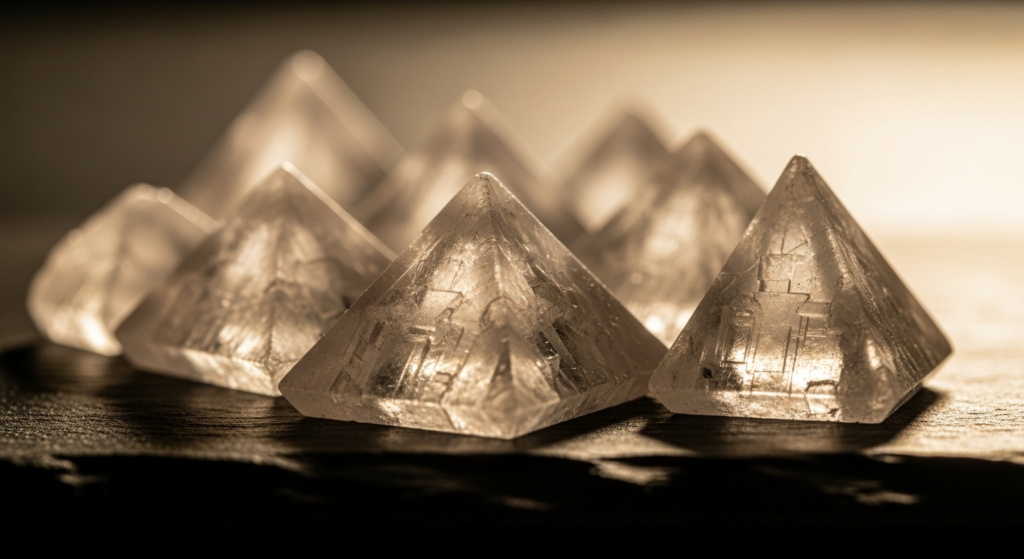
Bali Pyramid Salt — Stunning Crystal Architecture from Amed’s Ancient Salt Pans
Bali pyramid salt combines visual drama with exceptional flavor. Under precisely balanced natural conditions, our salt crystals form into naturally occurring pyramidal shapes—a geometric perfection that seems almost designed. Every pyramid is a unique expression of nature’s architecture, created entirely through the interplay of mineral-saturated seawater, tropical sun, and time. At $65–95 per 250g, pyramid salt from Amed is the finishing salt for chefs and home cooks who want their cuisine to be as visually stunning as it is delicious. This is salt that transforms a simple dish into a visual masterpiece while adding mineral complexity that enhances every flavor.
The Natural Formation of Pyramid Crystals
Pyramid salt crystals form through specific evaporation conditions that rarely align. The crystal geometry is not artificial—no machines shape the crystals, no additives encourage pyramidal formation. Instead, the mineral composition of Amed’s volcanic seawater, the tropical climate, and the precise water chemistry in our salt pans naturally create pyramidal crystal structures over months of patient evaporation.
Under harsh weather conditions, weak sunlight, or improper pan management, crystals form as irregular clusters or angular chunks. Only when everything aligns perfectly do pyramids emerge. This means pyramid salt production is limited and unpredictable. Some years we harvest more pyramids; other seasons, conditions don’t cooperate and we collect fewer. This natural scarcity is part of pyramid salt’s charm and value.
Every pyramid is approximately 1–3cm in height and perfectly symmetrical. The natural geometry creates optical effects where light refracts through the crystals, making pyramid salt sparkle on finished dishes. This visual effect is impossible to replicate with other salt types and is why professional plating artists and photographers request pyramid salt specifically.
Culinary Applications & Presentation Impact
Plated Dishes & Fine Dining
Pyramid salt is the preferred choice for fine dining presentation. Chefs arrange pyramids as visual elements on the plate, creating geometric interest that complements the dish architecture. The crystals catch light and draw the eye. This is why Michelin-starred restaurants request pyramid salt specifically.
Caramel & Chocolate Desserts
A single pyramid of sea salt on salted caramel or chocolate truffle creates the iconic sweet-salty tension that defines modern gourmet desserts. The visual contrast and geometric precision elevate the presentation from good to extraordinary.
Raw Fish & Crudo
Pyramid salt adds visual sophistication to crudo, ceviche, and sashimi presentations. The delicate geometry complements the minimalist plating typical of raw fish preparations.
Finished Meats
A pyramid of sea salt on a perfectly seared steak creates visual drama while adding mineral flavor. This simple finishing technique is signature to high-end steakhouses worldwide.
Vegetable Preparations
Composed salads and roasted vegetable platters gain visual interest from pyramid salt garnish. The crystals provide both flavor and visual punctuation.
Table Presentation & Gifts
Pyramid salt works beautifully as a table gift or favor. The natural geometry and visual beauty make it a memorable presentation. This is why gourmet retailers and fine gift shops stock pyramid salt specifically.
Taste & Mineral Profile
Pyramid salt shares the same mineral-forward flavor profile as our other salts because it comes from identical volcanic seawater harvested using the same palungan method. The 84-trace mineral profile creates mineral complexity and subtle sweetness on the finish. The taste is bright, clean, and distinctly different from industrial salts.
The difference between pyramid salt and other products is purely crystalline form, not mineral content or taste. You’re choosing pyramid salt for visual presentation and textural crunch, with the bonus of mineral-forward flavor that enhances the accompanying food.
Why Pyramid Salt is Scarce
Production of pyramid-shaped crystals depends entirely on natural conditions. We cannot force pyramidal crystallization without compromising salt quality. Instead, we monitor conditions and harvest pyramids only when nature cooperates. This means:
- Some harvest seasons yield abundant pyramids; others produce very few
- We refuse to artificially shape crystals or use additives to encourage pyramidal formation
- Scarcity is a direct result of our commitment to natural, unmodified salt
- Availability is genuinely limited and unpredictable
This uncertainty is why pyramid salt commands premium pricing and why we recommend pre-ordering for consistent supply. The scarcity ensures that pyramid salt remains special and unavailable in bulk commodity quantities.
How to Use & Present Pyramid Salt
Pyramid salt is typically used as a finishing touch and visual element rather than as primary seasoning:
Single Pyramid Placement
Position one or two pyramids on a finished dish as a visual garnish and flavor accent. This is the professional approach seen in fine dining. The pyramid should be positioned where it’s visually prominent—typically at the highest point of the plated element or at the plate’s geometric center.
Scattered Pyramids
For composed salads or vegetable preparations, scatter 3–5 small pyramids across the plate surface for visual interest. This creates a more playful presentation appropriate for casual fine dining.
Pyramid Rim
Some bartenders use pyramid salt to rim specialty cocktails. The geometric crystals catch light and create visual drama on the glass rim.
Table Service
Serve pyramid salt in a small glass bowl or on a slate tile for guests to add to their food as desired. The visual presentation becomes part of the dining experience.
Crushing (Optional)
While beautiful intact, pyramid salt can be crushed between fingers to release crystals when you want finer coverage without sacrificing visual drama. The crunch provides textural interest.
Frequently Asked Questions
Are pyramid salt crystals naturally formed or artificially shaped?
Pyramid crystals form entirely naturally through the interplay of our salt pan chemistry, tropical climate, mineral-saturated seawater, and evaporation dynamics. We do not artificially shape or modify crystals in any way. The pyramidal form emerges spontaneously under specific natural conditions that we create through proper pan management but cannot force. This is why pyramid salt production is limited and unpredictable—nature must cooperate. Industrial producers could create geometric crystals through mechanical shaping or additives, but this would be impossible to do while maintaining our standards for purity, mineral integrity, and flavor. The fact that our pyramids are naturally formed makes them genuinely special.
Why is pyramid salt more expensive than coarse or fine sea salt?
Pyramid salt is rare because it requires perfect natural conditions to form. Only a fraction of our salt harvest produces pyramids. Those that do form are individually selected for size, symmetry, and integrity—broken or asymmetrical pyramids are discarded. The visual presentation value is also priced into pyramid salt: you’re purchasing not just superior salt but visual drama that transforms plated dishes. Chefs, restaurants, and gift retailers willingly pay premium prices because pyramid salt serves culinary and aesthetic purposes that other salts cannot match. The scarcity, labor intensity, and visual uniqueness justify premium pricing.
Can I use pyramid salt for cooking, or only for finishing?
Pyramid salt can technically be used in cooking, but it’s not recommended. Heat, moisture, and liquid exposure cause the delicate crystals to dissolve before they provide their unique value. More importantly, destroying the visual presentation defeats the purpose of purchasing pyramid salt. Reserve pyramid salt for finishing applications where the crystals remain intact and visible. For cooking applications, use our coarse or fine sea salt—they’re perfectly suited to cooking while being more economical than pyramid salt. Save the pyramids for moments when their visual drama and delicate structure can be fully appreciated.
How should I store pyramid salt to protect the crystals?
Store pyramid salt in a cool, dry location away from direct sunlight in an airtight glass container. Keep the container upright and handle it gently to prevent crystal breakage. Avoid humidity—sea salt naturally absorbs moisture, which can soften crystals and encourage caking. We recommend storing pyramid salt in shallow glass bowls or display jars rather than deep containers, to minimize stacking pressure on lower crystals. If crystals develop minor moisture or slight caking, they’re still usable—the salt quality is uncompromised, only the crystal appearance may be slightly affected. Properly stored pyramid salt will maintain its visual and flavor integrity for years.
Order Pyramid Salt from Amed
Add visual drama and mineral complexity to your culinary creations. Limited availability—pre-ordering recommended.
EU PDO Certified 2022
Hand-Harvested
Natural Formation
Explore More from Bali Salt Sea
explore all salts • Fleur de Sel • premium gift sets • traditional process • export opportunities • order now