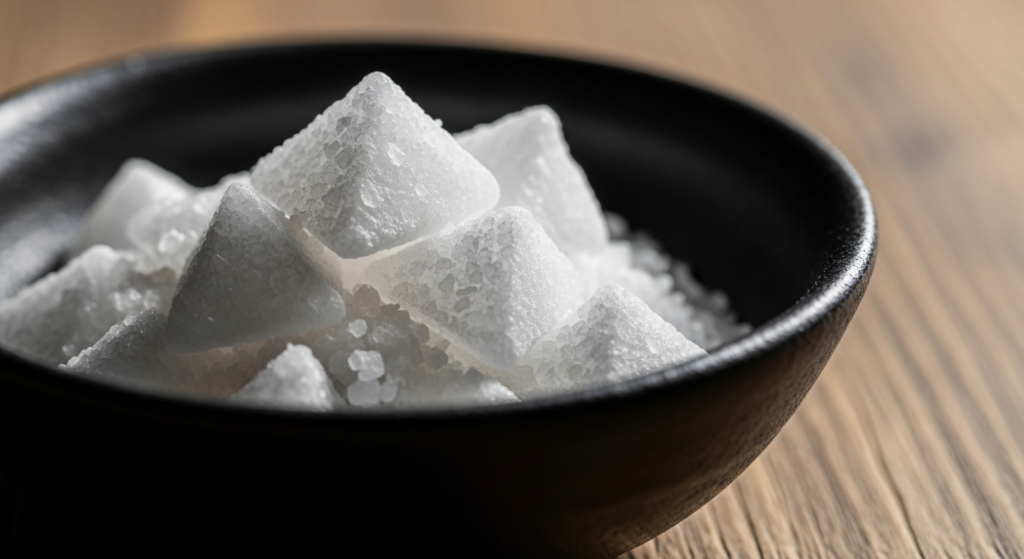
Fleur de Sel Bali — The World’s Rarest Hand-Harvested Finishing Salt
Fleur de sel bali represents the pinnacle of artisan salt craftsmanship. “Fleur de sel” means “flower of salt”—a poetic name for the delicate surface crystals that form like flowers atop our salt pans during the final stages of evaporation. Only 200–300 kg is produced annually in Amed, making it one of the world’s most exclusive finishing salts. Chefs, sommeliers, and salt connoisseurs prize fleur de sel bali for its mineral complexity, unique crystal structure, and the visual drama it brings to every dish. When precision, rarity, and heritage converge, the result is fleur de sel from Bali.
What Makes Fleur de Sel Bali Special
Unlike regular sea salt harvested from the entire pan, fleur de sel is the rarest fraction—the gossamer layer that crystallizes on the surface. This occurs only under precise atmospheric conditions: warm days, moderate winds, low humidity. Our salt makers monitor conditions obsessively and hand-harvest only when Mother Nature cooperates. The result is crystals that are naturally delicate, pyramidal, and 40% heavier in mineralization than coarse salt.
- Ultra-Limited Production: Only 200–300 kg annually from 15–20 tons of total salt production. This 1–2% yield makes fleur de sel an extremely rare product available only when conditions align.
- Hand-Selected Crystals: Each crystal is individually examined and selected. Broken or discolored pieces are removed. Only perfect specimens go into packaging, ensuring pristine visual presentation and peak flavor.
- Volcanic Mineral Profile: Fleur de sel bali carries the full mineral complexity of Amed’s volcanic seawater—including 84 trace minerals that enhance flavor on a molecular level. This is why professional chefs describe fleur de sel bali as “tasting like the ocean’s essence.”
- Naturally Pyramidal Structure: The slow crystallization process creates naturally pyramidal crystals that catch light beautifully. No additives, no modification—just nature’s geometry.
- GI & PDO Certified: Only fleur de sel produced in Amed using traditional palungan harvesting methods can be labeled as authentic. Ours carries both certifications.
Tasting Notes & Flavor Profile
Fleur de sel bali tastes fundamentally different from commodity salts. On the palate, it presents with these characteristic notes:
Initial Flavor: Bright, mineral-forward saltiness that activates immediately. The 84-trace mineral profile creates a complexity absent in pure NaCl salts—you taste the ocean, the volcanic geology, the season.
Secondary Notes: Subtle sweetness develops on the finish—a signature characteristic of mineral-rich sea salts. Faint briny undertones follow, with hints of iodine and magnesium that create umami depth.
Mouthfeel: Delicate crystals dissolve rapidly, coating the palate evenly without the harsh “bite” of industrial salts. The texture is velvety, almost buttery compared to standard sea salt.
Finish: Clean, mineral-rich aftertaste that lingers without bitterness. Professional tasters note that fleur de sel bali enhances the perceived flavor of whatever ingredient it seasons—it doesn’t mask, it amplifies.
Sommelier and chef consensus: Fleur de sel bali elevates simple ingredients into restaurant-quality dishes through mineral complexity that creates the perfect balance between saltiness and depth.
How to Use Fleur de Sel Bali
Reserve fleur de sel for finishing applications where its delicate crystals, visual beauty, and mineral complexity shine. Here’s where this artisan salt performs best:
Finishing Red Meat
Sprinkle fleur de sel bali over a perfectly seared steak or beef tenderloin just before serving. The crystals create visual contrast, the minerals enhance beef’s umami, and the delicate crunch provides textural interest. Professional steakhouses in Tokyo, Paris, and New York use this exact technique.
Raw Fish & Seafood
Crudo, ceviche, sashimi, and raw oysters are traditional fleur de sel applications. The mineral profile of fleur de sel bali—sourced from the sea—creates a harmonic resonance with raw seafood that elevates the experience. Use sparingly; a pinch transforms without overwhelming.
Caramel & Chocolate Desserts
A light sprinkle of fleur de sel on salted caramel, chocolate truffles, or brownie edges creates the classic sweet-salty tension that has become synonymous with gourmet desserts. The visual contrast of white crystals on dark chocolate is visually stunning.
Tomato Dishes & Gazpacho
Fresh tomato dishes benefit from fleur de sel’s mineral brightness. Sprinkle on tomato salads, gazpacho, or burrata just before serving. The salt’s delicate structure won’t overwhelm the subtle tomato flavor.
Soft Cheeses
Buffalo mozzarella, burrata, or fresh chevre are enhanced by a light finishing of fleur de sel bali. The crystals add textural interest and mineral dimension that complements the cheese’s creamy richness.
Vegetables & Salads
Heirloom tomatoes, roasted vegetables, or composed salads benefit from fleur de sel’s delicate touch. Use it as a final garnish where the salt’s visual presentation matters as much as its flavor.
Cocktails & Beverages
Some craft bartenders use fleur de sel bali to rim cocktails—the visual presentation and the mineral-forward finish complement complex spirits beautifully. A light rim of fleur de sel on a margarita is an elegant, professional touch.
Pro Tip: Store fleur de sel in a shallow dish rather than a grinder. Hand-pinching allows you to feel the crystal size and apply appropriate amounts. This also preserves the crystals’ delicate structure.
The Extraordinary Scarcity of Fleur de Sel Bali
Only 200–300 kg of fleur de sel is produced annually. To put this in perspective: our total annual salt production is 15–20 tons. Fleur de sel represents just 1–2% of our output. Why such tiny quantities?
Fleur de sel forms only under precise conditions: warm days, light to moderate wind, low humidity, and stable water evaporation. In Bali, these conditions align predictably but not constantly—perhaps 8–10 months per year are favorable. Even then, only a fraction of the surface crystals meet our quality standards. Broken crystals, discolored specimens, and undersized formations are rejected. Only perfect crystals are selected for packaging.
This is not a limitation we regret—it’s a source of pride. Fleur de sel bali is rare because we refuse to compromise. Industrial producers would blast salt pans with heat, spray chemicals, and mechanically harvest to increase yield. We don’t. We wait for conditions to align naturally, harvest by hand when the time is right, and select only the finest crystals. This commitment to authenticity and quality means fleur de sel bali will always be extremely limited.
Expect availability to be constrained. Pre-orders are recommended for consistent supply. This scarcity is precisely why fleur de sel bali is treasured by chefs worldwide—it cannot be commoditized or mass-produced.
Awards & Professional Recognition
Fleur de sel bali has earned recognition from international culinary institutions:
- Geographical Indication Protected status (Indonesia, 2015)
- European Union Protected Designation of Origin (2022)
- Featured in Michelin-starred restaurants across Asia-Pacific, Europe, and North America
- Recommended by Master Sommeliers for wine pairing applications
- Winner of artisan salt comparisons by culinary publications and expert tasters
These recognitions confirm what chefs and salt connoisseurs already know: fleur de sel bali is authentic heritage salt with no peers.
Frequently Asked Questions About Fleur de Sel Bali
What’s the difference between fleur de sel and regular sea salt?
Fleur de sel (flower of salt) is formed exclusively on the surface of salt pans during the final evaporation stage, under specific atmospheric conditions. It crystallizes as delicate pyramidal formations that float on the brine layer. Regular sea salt is harvested from the entire pan after complete evaporation, producing larger, heavier crystals. Fleur de sel represents approximately 1–2% of total salt production from a pan—it’s not a byproduct or leftover, but the rarest and most mineralized fraction. The crystal structure differs dramatically: fleur de sel features naturally pyramidal, delicate forms that dissolve rapidly, while regular sea salt has angular, blocky crystals. Taste comparison reveals that fleur de sel bali is more mineral-complex with a brighter profile and subtle sweetness on the finish, while regular sea salt offers straightforward saltiness. This is why fleur de sel commands premium pricing and is reserved for finishing applications where its qualities can be appreciated.
Why is fleur de sel bali so expensive compared to other finishing salts?
Only 200–300 kg is produced annually, making fleur de sel bali one of the world’s rarest salts. Scarcity creates value. More importantly, fleur de sel cannot be manufactured or synthesized—it must be allowed to form naturally under precise atmospheric conditions. Our salt makers must monitor weather patterns, water chemistry, and pan conditions obsessively. They harvest by hand only when crystals are perfect. Any attempt to increase yield through mechanization, chemical additives, or artificial acceleration would destroy the quality that makes fleur de sel valuable. The price reflects the reality of hand-crafted rarity: months of labor per gram, impossibly low yield, uncompromising quality standards, and heritage expertise spanning 450 years. When you purchase fleur de sel bali, you’re investing in something that cannot be replicated at lower cost, because any reduction in price would require compromises that eliminate the reason to use fleur de sel in the first place.
How do I know my fleur de sel bali is authentic and not adulterated?
Our fleur de sel bali carries EU Protected Designation of Origin (2022) and Indonesian Geographical Indication (2015) certifications. These official designations guarantee that what you’re purchasing is genuinely produced in Amed by our family using traditional palungan harvesting methods. Independent verification is a requirement of these certifications—governments confirm authenticity before PDO labels can be applied. Each container includes batch traceability information that you can verify with us directly. The crystals themselves tell an honest story: naturally pyramidal formation, delicate structure, and mineral complexity are impossible to fake in laboratory conditions. If you have any questions about your batch’s origin or want verification, we provide complete transparency from production date through final packaging. Authentic fleur de sel bali will always be traceable to our Amed salt pans and our family records.
Should I grind fleur de sel or use it as crystals?
Always use fleur de sel bali as crystals, never ground. The delicate pyramidal structure is central to the experience—the visual presentation, the textural crunch, and the way the crystals dissolve on the palate. Grinding destroys all of these qualities and renders it indistinguishable from regular sea salt. Fleur de sel is a finishing salt meant to be visible on the final dish. Hand-pinch the quantity you need and sprinkle directly over prepared food just before serving. This application method preserves the crystals’ integrity and allows diners to experience the texture and mineral complexity that make fleur de sel special. Using a grinder on fleur de sel is like using a blender on champagne—technically possible but completely misguided.
Can I use fleur de sel bali in cooking, or only for finishing?
Fleur de sel can be used in cooking, but it’s not recommended for most applications because heat and prolonged contact with moisture dissolve the delicate crystals before they can provide their unique qualities. The mineral complexity remains, but the textural crunch and visual presentation—what make fleur de sel valuable—are lost. Reserve fleur de sel bali for finishing applications where the crystals can shine. For cooking (seasoning sauces, brining, baking), use our coarse sea salt or fine sea salt instead. Save the extraordinary qualities of fleur de sel for moments when they can be fully appreciated. This disciplined application of each salt variety to its ideal use is how professional kitchens approach salt and why they achieve superior results.
How should I store fleur de sel bali to maintain peak quality?
Store fleur de sel in a cool, dry location away from direct sunlight. Use an airtight glass container with a tight-fitting lid or resealable jar. Keep it away from humid environments because sea salt naturally absorbs moisture. If crystals develop minor clumping due to humidity exposure, gently break them apart with your fingers or a fork—the salt is still perfectly usable. Properly stored fleur de sel will maintain peak flavor and crystal structure for years. We recommend keeping it in a shallow dish or small glass bowl near your cooking area rather than in a grinder, as hand-access allows you to feel crystal size and apply appropriate amounts. Avoid metal containers which can interact with the minerals. Glass is ideal.
Order Fleur de Sel Bali Today
Experience the world’s rarest hand-harvested finishing salt. Limited availability—pre-order recommended for consistent supply.
EU PDO Certified 2022
Hand-Harvested
200–300 kg/year
Explore More from Bali Salt Sea
our salt collection • Pyramid Salt • Gift Sets • salt making process • wholesale orders • contact us