Bali Fine Sea Salt — Versatile Premium Salt for Everyday Gourmet Cooking
Bali fine sea salt represents the everyday workhorse of gourmet cooking. With crystal sizes optimized for dissolving completely in liquids and recipes, fine sea salt from Amed delivers the mineral-forward flavor and heritage quality of our volcanic seawater in a form perfectly suited to cooking applications. Whether you’re seasoning soups, baking bread, or preparing sauces, fine sea salt provides the precision and flavor complexity that elevates everyday cooking into something genuinely special. At $28–48 per 500g, it’s the most accessible expression of our 450-year heritage and our commitment to uncompromised quality.
Why Fine Sea Salt from Amed
Fine sea salt represents the ideal balance between premium quality and practical versatility. Here’s what makes our fine sea salt special:
Perfect Crystal Size for Cooking
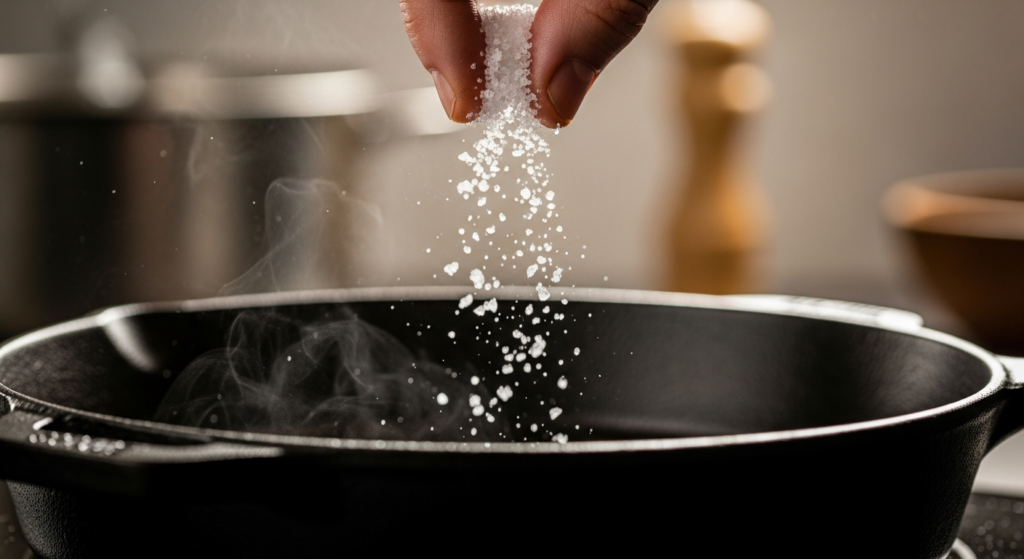
Fine crystals (0.5–1.5mm) dissolve rapidly in hot liquids, seasoning sauces, soups, and broths evenly. The crystals are small enough to blend seamlessly into recipes yet large enough to allow manual control when pinching salt between fingers. This makes fine sea salt ideal for recipes requiring precision seasoning.
Same Hand-Harvested Heritage
Fine sea salt is produced using the identical palungan harvesting method as our coarse salt. Hand-harvesters scrape crystallized salt from pan surfaces, preserving crystal integrity. The only difference from coarse salt is the final sorting and sizing process—a distinction in crystal size, not in production method or quality commitment.
Complete Mineral Profile
Fine sea salt retains all 84 trace minerals from Amed’s volcanic seawater. The smaller crystal size does not reduce mineral content; it simply redistributes the same mineral profile into more numerous, smaller crystals. This mineral-forward profile creates the signature brightness that distinguishes our sea salt from refined alternatives.
GI & PDO Certified Authenticity
Like all our salts, fine sea salt carries official Geographical Indication (2015) and Protected Designation of Origin (2022) certifications. These guarantee that what you’re purchasing is genuinely produced in Amed using traditional methods by our family.
Cooking Applications for Fine Sea Salt
Seasoning Soups, Broths & Stocks
Fine sea salt dissolves immediately in hot liquid, distributing evenly throughout broths and soups. The mineral profile brightens flavors without imparting any harshness. Professional chefs season broths with fine sea salt during cooking for even distribution.
Sauces & Reductions
Fine salt integrates seamlessly into pan sauces, reductions, and emulsified preparations. Add during cooking to allow even distribution. The volcanic minerals enhance sauce complexity, creating more interesting flavor depth.
Pasta Water
Use fine sea salt to season pasta cooking water at approximately 1 tablespoon per liter. Fine crystals dissolve quickly, creating properly seasoned water that seasons pasta from the inside out. This is foundational to Italian cooking technique.
Bread & Pastry Baking
Bakers use fine sea salt in dough preparations. The smaller crystals distribute evenly throughout dough, enhancing gluten development and flavor. Use 2% of flour weight by convention. Fine salt is superior to table salt in baking because it provides mineral enhancement without the iodine additives of standard table salt.
Vegetable Seasoning
When seasoning vegetables during cooking—roasting, sautéing, or blanching—fine sea salt distributes evenly, seasoning vegetables thoroughly without visible grains. Add during cooking for best integration.
General Cooking & Taste Adjustment
Fine sea salt is ideal for adjusting seasoning throughout cooking and for final flavor refinement. The ability to add precise quantities makes fine salt perfect for home cooks who don’t have scales and rely on pinching salt between fingers to gauge amount.
Rinsing & Blanching Vegetables
Some chefs add fine sea salt to water for blanching vegetables to preserve color and add subtle mineral flavor. Use sparingly—approximately 0.5 tablespoon per liter of water.
Flavor Characteristics
Fine sea salt from Amed tastes distinctly different from refined table salt or commodity sea salts. Professional cooks immediately recognize the signature flavor profile:
- Initial Impact: Bright, mineral-forward saltiness that activates immediately on the palate without harshness
- Mineral Notes: The 84-trace mineral profile creates a complex taste sensation. You taste the ocean, the volcanic geology, the season in which the water was harvested
- Subtle Sweetness: A characteristic finish that develops on the palate, absent in industrial salts but distinctive in mineral-rich sea salts
- Clean Aftertaste: Mineral-forward finish without bitterness or metallic notes. Professional taste testers note that fine sea salt from Amed enhances perceived flavor of surrounding ingredients
Compared to table salt (pure NaCl plus additives), fine sea salt from Amed tastes noticeably more complex and interesting. This complexity becomes apparent in simple applications where salt is a prominent flavor: finishing an egg, seasoning avocado toast, or sprinkling on fresh tomatoes.
Storage & Shelf Life
Fine sea salt is shelf-stable indefinitely if stored properly. Keep it in a cool, dry location away from direct sunlight. Use an airtight glass container with a tight-fitting lid or resealable jar. We provide resealable glass jars with our fine sea salt specifically to preserve quality.
Exposure to air and high humidity can cause caking because sea salt naturally absorbs moisture. If your fine sea salt develops minor clumping due to humidity, break apart with a fork or mortar and pestle—the salt is still perfectly usable and of full quality.
Properly stored fine sea salt will maintain peak flavor and mineral integrity for years. Some professional kitchens maintain salt collections similar to spice collections, with multiple varieties for different applications.
Frequently Asked Questions
How does fine sea salt from Amed compare to kosher salt for cooking?
Fine sea salt and kosher salt are different products optimized for different applications. Kosher salt has larger crystals and is designed for brining and curing meats—applications where the larger crystals dissolve slowly and distribute evenly through meat fibers. Fine sea salt has smaller crystals that dissolve rapidly in liquids, making it ideal for seasoning soups, sauces, and baked goods. Flavor-wise, fine sea salt from Amed offers distinctive mineral complexity from volcanic seawater, while kosher salt is typically pure sodium chloride. Choose fine sea salt for cooking applications where you want mineral flavor and quick dissolution; choose kosher salt for brining applications where slower dissolution matters. Many professional kitchens use both.
Can I use fine sea salt in a salt grinder, or should I keep it loose?
Fine sea salt can be used in a salt grinder, though it’s not necessary since the crystals are already small enough to pinch and apply precisely. We recommend keeping fine sea salt loose in a resealable jar so you can pinch directly when seasoning. This method provides better control than grinding and ensures crystals remain intact. However, if you prefer pre-ground salt for certain applications, fine sea salt can be ground—though some people find that grinding unnecessarily pulverizes already-small crystals into powder. The choice is personal preference.
Is fine sea salt suitable for people on low-sodium diets?
Fine sea salt is still 97% sodium chloride—the same as other salts. It offers no reduction in sodium content compared to table salt or kosher salt. The difference is mineral profile and flavor, not sodium reduction. People on medically prescribed low-sodium diets should work with their healthcare provider to determine appropriate salt intake, regardless of salt type. The mineral-forward flavor of fine sea salt does mean you might need slightly less salt to achieve desired flavor, potentially reducing total sodium intake slightly, but this is not a meaningful reduction for people requiring strict sodium restriction.
Should I use fine sea salt or table salt for baking?
Fine sea salt is superior to table salt for baking because it provides mineral enhancement without the iodine additives and anti-caking agents present in most table salts. These additives can affect baking results, though the effect is usually minor. More importantly, fine sea salt from Amed creates more interesting flavor in baked goods through the 84-trace mineral profile. Use fine sea salt at 2% of flour weight by convention (approximately 2g salt per 100g flour for most bread recipes). This delivers enhanced flavor compared to table salt while maintaining proper salt levels for gluten development.
Order Fine Sea Salt from Amed
Perfect for everyday gourmet cooking. Experience how mineral-rich sea salt transforms everyday dishes.
EU PDO Certified 2022
Hand-Harvested
Since 1578
Explore More from Bali Salt Sea
all products • Coarse Sea Salt • Infused Salt Collection • gift sets • export services • contact us